







In today’s fast-paced world, it’s easy to get caught up in a whirlwind of thoughts, tasks, and responsibilities. Whether it’s work, personal life, or the constant stream of notifications, it can feel impossible to find a moment of peace. This is where mindfulness comes in – a practice that can help you slow down, center your thoughts, and reduce stress.
Here are some mindfulness exercises specifically designed for busy minds that can be done in just a few minutes:
1. The 5-4-3-2-1 Grounding Exercise
When your mind is racing, grounding yourself in the present moment can help shift your focus away from anxiety. The 5-4-3-2-1 exercise is a quick way to reconnect with your surroundings and calm your mind.
How to do it:
- 5 – Look around and name 5 things you can see.
- 4 – Name 4 things you can touch.
- 3 – Listen for 3 sounds you can hear.
- 2 – Identify 2 scents you can smell.
- 1 – Name 1 thing you can taste.
This exercise brings you back to the present by focusing your attention on your senses.
2. Mindful Breathing
When you’re overwhelmed, your breathing often becomes shallow and quick. Mindful breathing helps slow your heart rate and gives you a moment to reset.
How to do it:
- Sit comfortably with your back straight.
- Take a slow, deep breath in through your nose for a count of four.
- Hold your breath for four counts.
- Exhale slowly through your mouth for a count of six.
- Repeat this cycle for a few minutes, focusing solely on your breath.
This exercise helps calm your body, clear your mind, and bring a sense of tranquility.
3. Body Scan
A body scan is a great way to relieve physical tension and increase awareness of how your body feels. It’s perfect when you need to unwind and connect with yourself, especially when stress shows up physically.
How to do it:
- Find a quiet place where you can sit or lie down.
- Close your eyes and take a few deep breaths.
- Start by bringing your awareness to your toes. Slowly move upward, paying attention to each body part, relaxing as you go.
- Notice any areas of tension and breathe into them, allowing the tension to release.
- Continue moving up your body, all the way to your head.
The body scan helps you release built-up stress and reconnect with your physical self.
4. The “One-Minute Mindfulness” Exercise
Sometimes, all you need is a minute to clear your mind and refocus. This exercise can be done anywhere – whether you’re at work, at home, or even in the car.
How to do it:
- Close your eyes or softly gaze at something in front of you.
- Take a deep breath in and exhale slowly.
- Set a timer for one minute, and during that time, focus all your attention on your breath.
- If your mind starts to wander, gently bring it back to your breath.
- When the timer goes off, open your eyes, take a deep breath, and notice how you feel.
This quick practice helps break the cycle of overwhelm and resets your mental state.
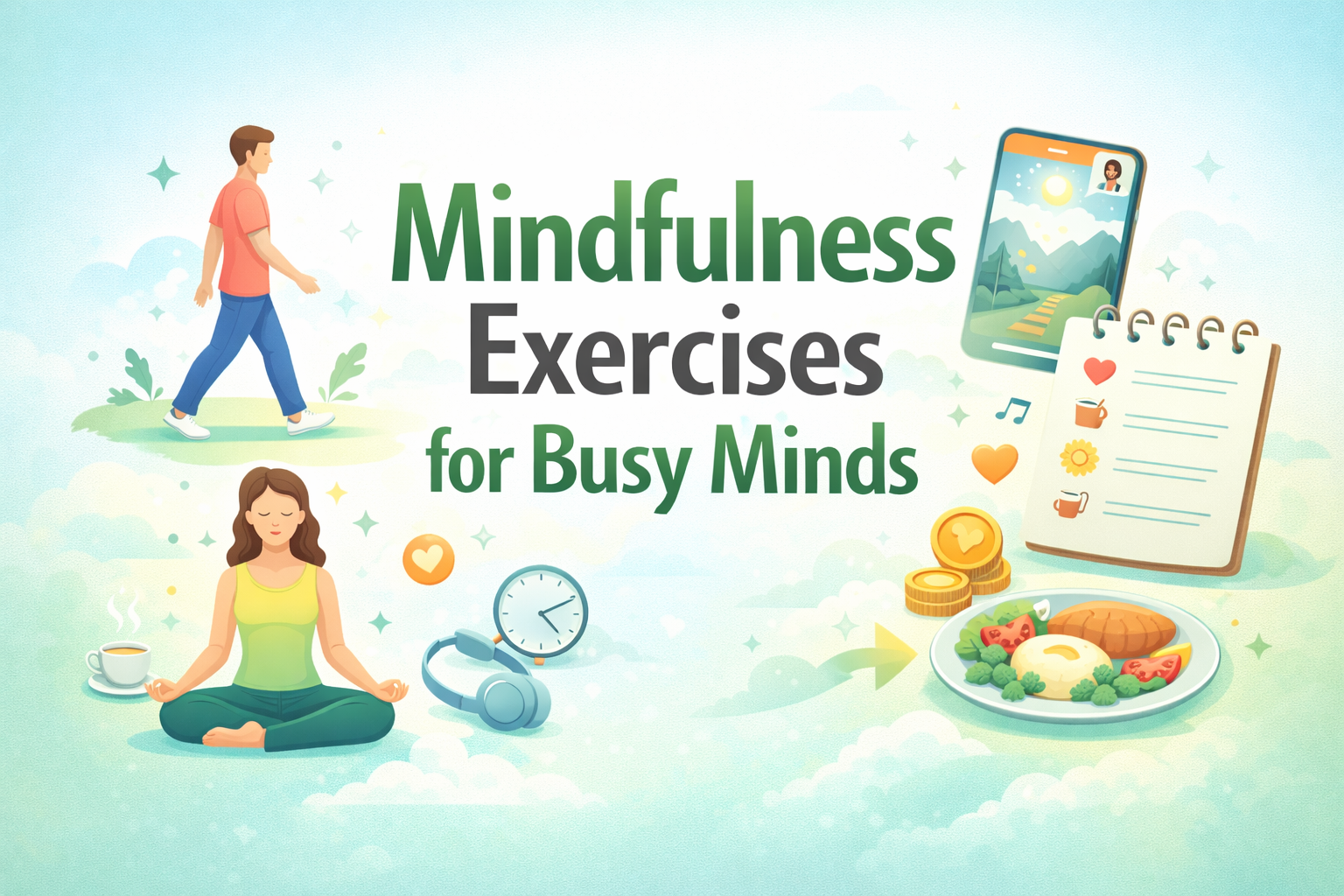
5. Mindful Walking
If you’re someone who’s always on the go, mindful walking is a great way to combine movement with mindfulness. It helps you release stress while staying active.
How to do it:
- Find a quiet space to walk, whether indoors or outside.
- Walk slowly and deliberately. Focus on the sensation of your feet as they touch the ground.
- Pay attention to each step, the movement of your body, and your surroundings.
- As you walk, let go of any rushing thoughts. Stay focused on the present moment, your body, and the rhythm of your walk.
Mindful walking can be a refreshing break during the day and a simple way to boost your energy.
6. Mindful Eating
In our busy lives, we often eat while multitasking, which can lead to overeating and poor digestion. Mindful eating encourages you to slow down, enjoy your food, and connect with the nourishment you’re receiving.
How to do it:
- Start by sitting down without distractions (no phone, TV, or computer).
- Take a small bite of food and focus on its taste, texture, and temperature.
- Chew slowly, paying attention to each bite. Notice how your body feels as you eat.
- Eat without rushing, and pause to check in with your fullness level.
Mindful eating not only helps with digestion but also encourages a healthier relationship with food.
7. Guided Meditation
If your mind is particularly busy, a guided meditation can provide structure and help you focus. Many apps and YouTube videos offer short, guided meditations specifically designed to relieve stress and calm the mind.
How to do it:
- Find a quiet place to sit or lie down.
- Use an app like Calm or Insight Timer, or search for a guided meditation video on YouTube.
- Follow the guide’s instructions, which typically involve focusing on your breath or visualizing a peaceful scene.
- Allow yourself to sink into relaxation and let go of racing thoughts.
Guided meditation helps quiet the mind and restore balance, even when you’re short on time.
8. Gratitude Practice
When your mind is overwhelmed with stress, focusing on what you’re grateful for can shift your perspective and improve your mood.
How to do it:
- Take a moment to reflect on 3 things you’re grateful for.
- These can be big or small – from the support of a loved one to the simple pleasure of a warm cup of coffee.
- Take a deep breath after each item, really feeling the gratitude.
Gratitude practices can help reframe your mindset, bringing you into the present and allowing for positive feelings to take over.
Final Thoughts:
Mindfulness doesn’t require long hours of practice. Even a few minutes each day can significantly reduce stress, improve focus, and boost your overall well-being. Try integrating these exercises into your daily routine, and experience the power of mindfulness in your busy life. By being present in the moment, you can create a sense of peace amid the chaos of your everyday schedule.